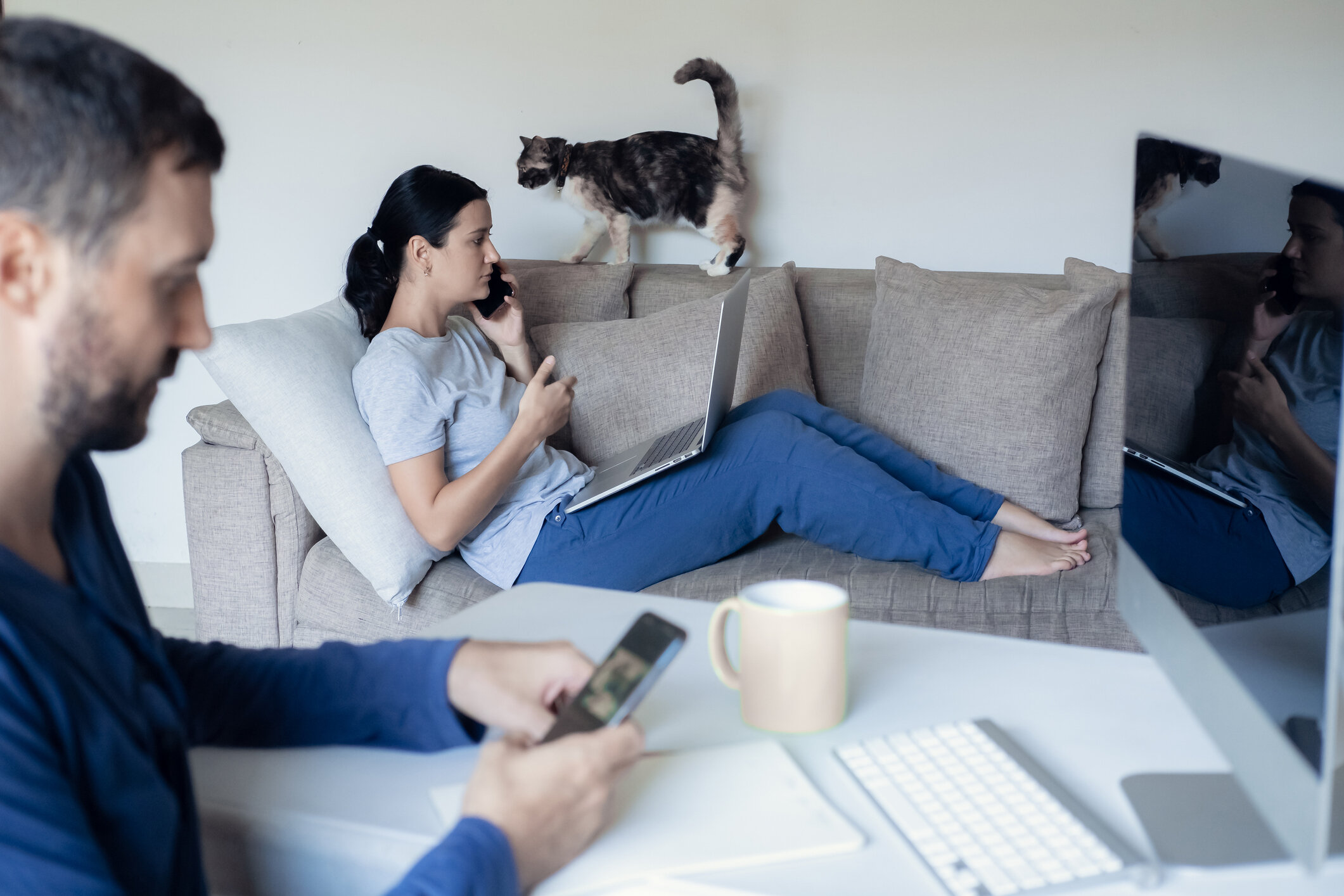
Episode 168: Home Alone

The general discourse around it is let’s all band together and support the mothers and fathers in this trying time. And not once has it been mentioned, let’s band together and support the people who are enduring this by themselves.
— Susie
Photo by simonapilolla/iStock / Getty Images

Photo by simonapilolla/iStock / Getty Images

So much of what I’ve been reading about how to adjust in the pandemic is how to keep up social relationships. And that’s unquestionably important. But I think it’s also important to talk about the value of solitude.
— Joan DelFattore
It forces you to some personal growth whether you like it or not. When it’s not about survival you get to know yourself in a different way.
— Magali Rozenfeld
Joan DelFattore

Joan DelFattore

Being single is a lifestyle choice for some women and an unwelcome reality for others. In this episode we meet three women, each with different perspectives on living and working alone, especially during a pandemic.

Retired professor Joan DelFattore has been happily single for decades. Susie, a consultant, is mourning the lack of a husband and children. Her isolation during Covid just makes everything feel worse - particularly when HR seems fixated on families. And psychotherapist Magali Rozenfeld says being by yourself can provide unexpected opportunities for growth.

You can also read a transcript of the show.


Further reading: This is the best piece on loneliness I’ve ever read, by Financial Times writer Claire Bushey.

Here’s Joan’s Washington Post piece, Singles Say They’re Better Prepared to Self-Quarantine, But Many Fear Getting Short-Changed in Medical Treatment.

Episode 167: Power and Body Language (re-release)

You take a normal body and you make it even more compact and that’s a sign of “femininity”, and it’s also a sign of low power.
— Prof. Marianne LaFrance
Photo: Stocksy

Photo: Stocksy

Quite often I get pulled in for a kiss...I think some men find it awkward to shake a woman’s hand because they think a handshake is something you do with men, and kisses are something you do with women.
— Elaine Moore

In this episode we re-visit the topic of body language in the workplace. We look at hunching, spread legs, eye contact, and kissing - all in a business setting.

I speak to Yale psychology professor Marianne LaFrance about how men and women play up their power, or lack of it, through non-verbal communication. And Financial Times journalist Elaine Moore talks about how she deals with unwanted male kisses at business meetings.

This show originally aired six years ago. I suspect a lot hasn’t changed, but some things have. After all, we’ve had both the #MeToo movement and a global pandemic. So much of our non-verbal communication today is being observed through a screen. I’d like to re-visit some of these themes again in 2021.

You can also read a transcript of the show.

Further reading: If you haven't seen it, here's Amy Cuddy's famous 2012 TED talk on body language shaping who you are.

Here's Elaine Moore's FT piece, A plea to high finance: Can we give kisses a miss?

Marianne LaFrance is the author of Why Smile - The Science Behind Facial Expressions.

And here’s the blog post I wrote about Marianne’s work on smiling, and how that intersects with power.

Episode 166: How to Work Better from Home - a conversation with Laura Vanderkam

It was hard to figure out how, psychologically, do you feel productive for the day when you haven’t gone anywhere? How do you know the day is over?
— Laura Vanderkam
Photo by doble-d/iStock / Getty Images

Photo by doble-d/iStock / Getty Images

Working from home is the new normal for a lot of us. But that doesn't mean we like it. Or that we're good at it.

Laura Vanderkam in her home office

Laura Vanderkam in her home office

In this episode I sit down with Laura Vanderkam, author of I Know How She Does It, What the Most Successful People Do Before Breakfast, and, most recently, The New Corner Office: How the Most Successful People Work from Home.

Working from your house or apartment has taken on new meaning - and stress - in the pandemic. But Laura says there are ways to gain focus, force yourself to stop at the end of the day, and make the rhythm of the whole thing work for you.

Working from home won't go away when the pandemic does, but doing it well is a skill that most of us need a little help mastering.

You can also read a transcript of the show.

And check out the new podcast series Work It, created by two women who beat out hundreds of entries to win a podcast competition!

Further reading: Here’s a blog post of Laura’s that outlines her suggested ‘split the week’ schedule, which two partners with kids could share.

Episode 165: Yes, You Can Negotiate During Covid

It might be as simple as framing it as, ‘I want to make sure I’m the most productive, that I’m feeling valued, and when I’m feeling valued I’m giving it my all and you’re getting a lot more out of me.’
— Fotini Iconomopoulos

Now may not seem like the best time to ask for what you want at work, whether that's more money, a new title, or more time off. Everyone's under stress and putting in extra hours, right? But this situation isn't ending any time soon. And you may be about to burn out.

Fotini iconomopoulos

Fotini iconomopoulos

So why NOT ask for what you want and need?

In this episode we meet negotiation coach Fotini Iconomopoulos. We talk about her background as a child of Greek immigrants and what that taught her about advocating for herself. And we discuss how women in particular can stop their empathy getting in the way of reaching their goals during difficult times, when so many of us will tell ourselves not to be a nuisance, not to ask.

You can improve your situation, even at a time like this.

You can also read a transcript of the show.

Further listening: You’re Worth It - the Power of Negotiation (part 1)

Will They Still Like Me? The Power of Negotiation (part 2)

Episode 164: Hard Conversations

When we start to de-prioritize our careers and prioritize a partner’s career there’s this inherent message of, ‘my career, my identity, my desire, less important.’
— Rachel Garrett
Photo by Space_Cat/iStock / Getty Images

Photo by Space_Cat/iStock / Getty Images

In this show we meet small business owner Rachel Garrett who, as a coach, specializes in boosting women's careers - only to find that during Covid, her own was flagging. She is far from alone.

We now know that in September, four times as many women than men left the US workforce thanks to the pressures of the pandemic. Rachel and I discuss the difficult conversations she started at home about whose career was getting priority, how to redress the balance, and why it's important - even now - that women don't put themselves on the sidelines.

This episode continues our series on what is happening to women’s careers during the ongoing pandemic.

Rachel first appeared on the show last year in an episode about coaches and their clients.

You can also read a transcript of the show.

Episode 163: No Kids. Working Hard.

I never wanted to have kids.... so I do feel like I am reaping the rewards of those choices, and I was before Covid. All this year has really done is shine an extra spotlight on that.
— Jennifer Szambecki
At this point in the pandemic, I don’t know that I’m as motivated as I was before to work my way up.
— Sandra

In this third episode in our mini-series about what’s happening to women’s careers during the pandemic, we look at an under-discussed group.

We know women's careers are suffering, but much of the talk around this revolves around women with children at home. But what if you don't have kids, or your children are grown up?

In this show we meet two child-free women with quite different experiences of work during Covid. One feels her career is thriving. The other wonders what ambition means anymore when she just wants to get offline before midnight.

I’d love to hear from you if you’re in this category - either your kids have grown up, or you don’t have any. What does this time feel like to you? Are you overwhelmed at work, covering for others, or are you on a roll?

You can also read a transcript of the show.