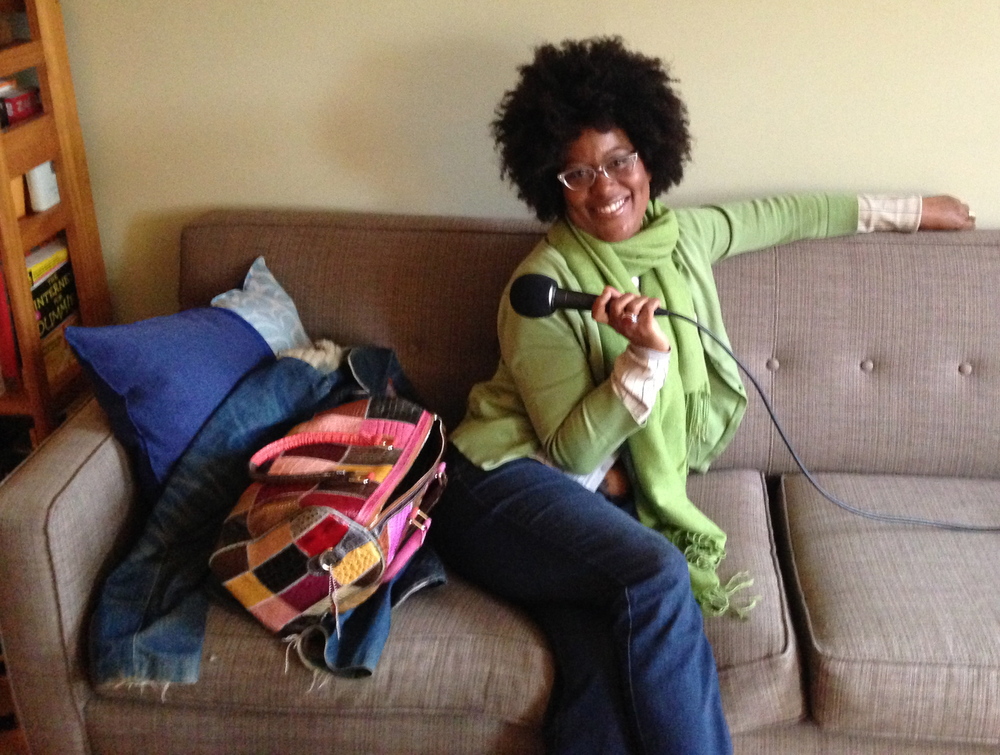
Episode 32: Home as career-killer

December 16, 2013

"As women we get so much career advice about what to do in the office, but one of our biggest career obstacles happens at home, before we even walk out the door in the morning." - Liz O'Donnell

"What I see with my friends in Europe, male and female, is that we all work 90%. We never quite do the extra hour...because you have to take the kids to school or get the kids from school." - Simon Kuper

Liz O'Donnell

In this show I talk to Liz O'Donnell of the blog Hello Ladies. She's written a book called Mogul, Mom & Maid about how tough life still is for women who work a fairly serious job and have a family. A lot of women will relate to the stories her interviewees tell about their messy, exhausting lives. Liz, the sole breadwinner in her family, has long given up on most housework (her husband is rather selective in his choice of tasks). But she's quite unusual.  She points out that American women are caught between high expectations at work and traditional social norms at home - not to mention a school system that thinks we're still in the '50s. 

Simon Kuper

 I knew I wanted a male perspective on some of the things Liz and I discussed. Financial Times journalist Simon Kuper came to mind right away. He's based in Paris, and three years ago he wrote this column in the FT about the many hours he was devoting to childcare, and how much of a shock to his system that was proving. He talks about the work-and-family culture in Europe, where men willingly take paternity leave, and where the work ethic is less relentless (and we're not just talking about France). He says men want what women want. Attention Sheryl Sandberg.

17 minutes.

Please go to Mule Radio's homepage and fill out their five-minute survey - doing this means you give me a greater chance of getting sponsors for this show.

Show notes:

Pew Social Trends survey: Modern Parenthood - Roles of Moms and Dads Converge as they Balance Work and Family (March 2013)

Women with Elite Education Opting out of Full-Time Careers - Vanderbilt University (April 2013)

Why Dads Don't Take Paternity Leave - Wall Street Journal (June 2013)

Paternity Leave Dads Seen as 'Not Man Enough' - Globe and Mail (August 2013)

More Men Take Paternity Leave - The Tennessean (November 2013)


SHOW TRANSCRIPT (but it's much more fun to listen to the podcast):

Welcome to The Broad Experience, the show about women, the workplace and success. I’m Ashley Milne-Tyte.

This time we look at the idea that part of the reason women aren’t further ahead at work is because they’re still doing so much at home…

“As women we get so much career advice about what to do in the office but one  of our biggest career obstacles happens at home before we even walk out the back door in the morning, we already have a hurdle to overcome.”

And we hear a male view on domestic arrangements and career inhibitions…

(:09) “I would like to be the most successful journalist in the world but I have to you know, at seven in the morning I have to spend the whole weekend in playgrounds shouting at people.”

Coming up on The Broad Experience.

Liz O’Donnell is the sole wage earner in her family of four. She works in marketing in Boston. Her husband stays at home in the suburbs to run the house and look after their two kids when they get back from school. On top of her job, Liz runs the blog Hello Ladies, and she’s the author of a new book called Mogul, Mom, and Maid. She doesn’t spend much time slaving over a hot stove, let alone a vacuum cleaner. But she realized a lot of working women she knew were. One the one hand, they had their jobs in the hard-charging, high expectations American workplace. On the other, they had to deal with everyone’s expectations of what a woman’s role is outside the office. Take the school gates…

“The schools absolutely still default to the mother. At the beginning of the year we have to fill out so much paperwork about emergency contacts, medical records, etc. and regardless of the fact my husband and I always write down that he’s at home and I’m in the city at work…if my child is sick, the school calls me.”

School drives her crazy in other ways, too.

“I don’t have working mother guilt, as the breadwinner I will never feel guilty about earning a living for my family, I’m fairly organized, I can get it all done, but the times you’ll find me in tears about being a working mother, it’s usually related to the schools – it’s related to the lack of communication or yet another opportunity to have to tell my children no. “

No, because yet again she’s been told about some school event at short notice and it’s too late to cancel a client meeting and get there. She tells the story of one of the professional women she talked to for the book and how that woman has her child in a school that has half days one day each week. As if arranging pickup and childcare around that half-day weren’t hard enough, the woman noticed that during one particular week the school had moved the half-day from its regular slot. Liz says this kind of last minute logistical hurdle is the kind of thing women juggle in their heads every day…

“The thought process and the thinking that goes into it and how much planning she has to do just for that one change, it was incredible, and these are the things I call the invisible tasks.”

AMT:

You’ve brought me very neatly to my next question. Initially a reader might think, well what does all this have to do with the workplace? But actually the fact it’s usually the woman who’s thinking and planning and has all this on her plate on top of work…it takes up an enormous amount of head space.”

“It takes up an enormous amount of head space, that’s it. It doesn’t necessarily take up an enormous amount of space on your to-do list. It may feel like in your home things are split fairly equitably: I fluff, you fold, I wash, you dry…but this thinking, this constantly thinking through all of the moving parts…where you need to be, where your child needs to be, when the school is open, when the forms are due, when to buy the uniform, practice has changed - it’s mental energy.”

One of the things you pick up on in the book is that few women felt their husbands did enough at home. The husbands, though, felt they did quite a bit – and most did a lot more than their own fathers. According to the Pew Research Center, the amount of time American fathers spend with their kids has almost tripled since 1965.

Both halves of these couple worked, but the women told stories of the guy heading straight to his tool shed at the end of the day instead of picking up the baby, or not cleaning up after dinner even though that was his regular chore. Still…

AM-T:

“Another thing that jumped out at me from the women you interviewed was the extent to which…a lot of them actually felt that – almost that it really was their role to do this or their husbands couldn’t do it the way they could, or this idea of he doesn’t notice if it’s dirty…he doesn’t even see it, so I just do it because it would never get done, and I would be driven crazy by it, that kind of thing, and I think that’s so interesting because it brings up the question of how much of it is coming from us, and how much is coming from the outside.”

“Yeah, and I hesitate around this discussion because I don’t want to put it all on the woman. I mean clearly men need to step up their role at home – you look at their statistics, you look at the women in the book, there’s more men could be doing. At the same time there is a level of maternal gatekeeping that we back ourselves into these roles at home. And again I think it has to do again with how we were raised what we saw our mothers do, what we hold as the image of a perfect mother, there are so many factors. But if women can learn to let go…I go out and speak to groups of women now the book is published and one of the things I say is put down the mop. Whatever the mop is for you…if it’s making a perfect hospital bed when you make the beds in the morning or whether your child’s clothes are pressed, whatever it is, try it for one week, just one week, no one will get hurt. And you’ll see you can free up some more mental time and physical time…and, you know, start to let go of your standards.

There was a woman in the book who I thought said something rather interesting. She said you know when my husband sends the kids to school and forgets a snack he says, ‘Oh, I forgot the snack today.’ But if I send my kids to school without a snack I think, ‘I am the worst mother ever.’ So it’s perspective.”

AM-T:

“Right. It’s the societal pressure on women to be perfect and of course to be perfect mothers because that’s the role we were born to play…and you also talk about the occasion where Michelle Obama described herself as mom-in-chief and all the writing and blogging that took place after that…and that really struck me as well because I think very much that at the end of the day society still thinks that is what women should be above all else and that is our most important job, in quotes…”

“That phrase crops up in the media every three months, right? That motherhood is the most important job.  And you even have the president saying it. And I don’t buy it – I don’t buy it for a number of reasons. One is that we have to shift to think if that’s the most important job, it has to be parenting is the most important job.

AM-t: Right.

“The other thing I think is interesting about this pressure we feel is that it used to be pre social media that you’d feel this pressure by looking at celebrity moms…somebody would have a baby and they’d lose the weight and be out and about and then back to work on a film…You’d say, why can’t I be like that? But intellectually you knew that actress was paid to be that thin and perfect – and had a whole army of people helping her. Now, we do that to ourselves by posting our most perfect moment on Facebook, so now I go on Facebook and see the woman down the street having a wonderful family night, or going on a fabulous vacation, or celebrating a great career success. So now it’s harder I think to not compare to what we think other women are living - you know, these perfect lives they might be living.”

And again, that kind of endless comparison eats your mental energy – not to mention your self-esteem. In short, stay off Facebook. Talking of comparisons, a lot of women Liz spoke to felt there were double standards when it came to how parents are perceived at work.

“You see the man who’s leaving early to coach his kid’s sports team being lauded as a great father and a good guy, and someone we should promote. And you see the woman who’s leaving early to catch the bus, as oh, not so committed to work, she’s a mom. I think the real change will happen when these men start to find a way to say hey, I want what she has. I think more and more men – and you see studies coming out of Boston College Center for Work and Family – you see more and more men saying I want more balance in my life…they may have been raised to say I provide and I die, right? But they are realizing something much more fulfilling is happening in the home…”

But it’s still risky for a lot men to say they want more time with family.  In the US, the attitude at most workplaces is that work comes first. I know someone who works for a global company based in New York. When his son was born several years ago he had the opportunity to take paternity leave. But he was taken aside by some male colleagues and told not to do it. They said taking time off to be with his baby would make him look like a slacker. So he didn’t take his leave. That’s totally different from the attitude in Europe, where you’re expected to take your paternity leave, and looked on askance if you don’t.  We’re going to hear more about European attitudes to career and family in a minute. 

SQUARESPACE SPONSOR BREAK HERE - use the code 'BROAD12' to get a 10% discount when you sign up.

After talking to Liz, I decided I wanted a man’s view on some of this stuff. And I knew exactly the man I wanted. Simon Kuper is a Financial Times columnist. He and his wife live in Paris with their three children, a seven-year-old girl and five-year-old twin boys. Life in the home, fulfilling? Yes, but also unexpected.

“I grew up thinking that I would have a job and I’d have a family, but I’d never conceived of having a family being that, you know, you’re woken up at 7 in the morning by children making a noise, and then you have to help everyone get dressed and brush their teeth and then you want to be back at 6 to spend time with them and you end up completely exhausted at 8.30 by time they fall asleep, etcetera. And when the weekend starts you face 36 hours straight with them. And I’d never imagined that.”

Why would he? When he was a child in the seventies, as he wrote in one of his columns, girls grew up playing with dolls and visiting new babies. Boys didn’t. They grew up thinking they’d have time to themselves.

“When I vaguely thought about having children I thought well, you know, there’ll be a child or two but I’ll really just work…and I didn’t really think about who would bring up the children. Now I find myself in a situation I hadn’t expected at all and that makes it probably more difficult, because there’s a voice in me that says if you weren’t putting the children to bed now, or if you weren’t going to spend the entire weekend with the children, you could do a million other things, you could do all your work, or go to movies, or go to Rome, you know, all these fantasies, whereas I should really be thinking, well, this is my life.”

I started to say this made sense – that no wonder men feel quite proud of themselves for the work they do at home given most of them weren’t raised to think they’d be playing these roles at all. But Simon disputes the idea that men feel smug about their contribution.  

“Almost all the men and women I know would subscribe to the statement ‘men and women are equal’, so we should both raise the children, we should both work. I don’t really know people who would dissent from that statement.  So when I do the same amount of childcare as my wife or perhaps a bit less, nobody says, oh, that’s wonderful, you’re doing as much as a woman, people say that’s about right, that’s what you should be doing. I think men don’t largely feel in my circle we are wonderful, we’re doing a lot of childcare, it’s just what your wife and yourself and your friends expect from you.”

I don’t see quite that level of egalitarianism here in the US. Life in this country involves more hustle these days what with stagnating wages, expensive childcare and rising healthcare costs. It’s also a work culture of long hours.

“A job in upper-middle class America is more than full-time. And so generally you can only have one more than full-time job per family. Whereas what I see with my friends in Europe, male and female, is we all work 90% - we never quite do the extra hour, not because you’re lazy…but because you have to take the kids to school or get the kids from school…so both men and women I see with families in my generation in Europe, we’re not maxing out our careers, we’re doing as well as we can and more or less trying to get by in these years…I think that’s a difference from the upper middle class American families I see…where the man is maxing out his career and kind of has to, to earn the family budget, and the woman has left her career.”

 And that does happen, of course, even when both parties earn well. Vanderbilt University released a study earlier this year - it found women from America’s most elite universities were less likely to work once they had kids than other educated women. 

Liz O’Donnell says her book is really for the women in the middle - people who actually can’t afford to give up their job, but in many cases have had to give up their cleaner.

“So women who are saying I really want a fulfilling career, I want to add value, be valued, I want a good paycheck and a good job, but I can’t do it at 60 hours a week, and I’m not willing to make the personal sacrifices that are required to go all the way to the C suite.”

Simon Kuper says he and his male friends aren’t willing to make those sacrifices either.

“There’s this debate among women about, you know, how hard it is to combine work and family and how women are in this really difficult position, which is all true. But I think what that debate ignores, and I felt it reading the Sheryl Sandberg book, is that most men I know have many of exactly the same problems. I’d like to be the most successful journalist in the world but I have to – at 7 in the morning I have to spend the whole weekend in playgrounds shouting at people, so…

AM-T: Can I just say, you’re not doing too badly…

Well, I make huge work sacrifices, so all these Sheryl Sandberg arguments about how women should lean in, you know, most of my male friends it’s the same, we’re not leaning in, who has the time to lean in to your career the whole time? So I think that the Anne-Marie Slaughter and Sheryl Sandberg argument is all totally valid, and it’s definitely harder for women, especially in the US, but they talk as if it’s only about – as if only women have these choices, which is just false.”

Simon Kuper. Thanks to him and Liz O’Donnell for being my guests on this last show of the year.

I’m going to post some show notes under this episode at The Broad Experience dot com, including a link to a recent study on men, women, childcare and housework – as well as a few articles about attitudes to paternity leave.

That’s The Broad Experience for this time. I’m taking a break till late January, but if you’re a newcomer to the show or you’ve missed an episode or two, there’s plenty to catch up on. A few favorites from this year are the 6-woman debate on Sheryl Sandberg’s Lean In, the show I did on professional women and sex, and the show I did on women in Kenya.

You can find all those via a link on the homepage and also on iTunes.

The Broad Experience is supported by the Mule Radio Syndicate – they – and I – want to find out more about my listeners so please take 5 minutes to go to Mule Radio dot net and fill out the survey they’re linking to from their homepage. As some of you know putting this show together every 2 weeks takes a tremendous amount of time and energy and I don’t get paid for it. Filling out that survey will help when it comes to finding the right kind of sponsors for this podcast and getting more of them. So please fill out that survey.  It really will be helpful.

I love hearing from people so if you have thoughts or suggestions about the show shoot me an email at Ashley at The Broad Experience.com. And please keep spreading the word about the show.

I’ll be back in 2014. I’m Ashley Milne-Tyte. Thanks for listening.

Episode 31: Tips for success from an entrepreneur

December 2, 2013

“My attitude really is that yes is always the answer - now how are we going to do it? Instead of approaching a problem like, 'I don’t think we can do this, this is gonna be hard.'" - Alexandra Ferguson

The first in my Tips for Success series featured the CEO of an advertising agency. We're staying in the creative sphere with this second show. A lot of women dream of starting their own business. My guest actually did it. She's Alexandra Ferguson, CEO of the company of the same name, prolific maker of pillows and makeup cases inscribed with cheeky sayings. 

Alexandra Ferguson at her desk in BrooklynShe started sewing in her living room five years ago. Now she works out of a small factory space in Brooklyn and has more then ten employees - and growing. But getting to where she is now has involved plenty of ups and downs. 

We talk about:

  • How she got started and overcame naysayers to keep going
  • What it's like working with her mother
  • Mistakes made and lessons learned from them
  • Not doing it all alone

13 minutes. 

Here's a blog post Alexandra wrote earlier this year that's relevant to our discussion: How I Went From Whiny 'No' to Unstoppable 'Yes'. 


In this photo, taken at the factory, Alexandra is holding a couple of the 'shrunk' pillows you heard about during the podcast - ready to ship, taking up less space and costing less money.

Her mother, Charlotte, is on the far right.

Episode 30: Women in academia

November 18, 2013

"You have to be able to concentrate and that requires a lot of time free from any other thoughts. And that means you can’t be thinking about taking the kids to the doctor, you can’t be thinking about how dirty the house is." - Aeron Haynie

"Who do you report an assault to when it’s your boss? What do you do when that’s the person who raped you?...and when you finally talk to HR they say you’re a graduate student, you’re not technically an employee, so they can’t help you.” - Kate Clancy

clancy_kate2-b.jpg

Kate Clancy, anthropology professor at the University of Illinois

To an outsider like me, being a professor looks like a great job (I'm thinking vigorous intellectual engagment, flexibility, and long vacations). Often it is, and not just for those reasons. But just because you work in a center of higher learning doesn't mean everything that goes on there lives up to humanity's highest ideals. From maternity leave to work/life balance to getting promotions, life in the ivory tower is often tougher for women. We look at the statistics, talk about why women are still lagging men on the employment front, and get into a sobering discussion about sexual harassment in the scientific community, which, like other STEM fields, is trying to attract more women. 15 minutes.

You can also read a transcript of the show.

Episode 29: Show me the money

November 4, 2013

Natalia Oberti Noguera

"We're an angel investing bootcamp for women...but people hear ‘women’ and ‘money’ and they think philanthropy, donation, grants. I have to change the conversation...and bring in the investing focus." - Natalia Oberti Noguera

"If you don't feel 'worthy', that’s going to show up in the prices that you charge, in the way you negotiate or choose not to negotiate.”

- Jacquette Timmons

Jacquette Timmons on my sofa after our interview

In this show we tackle a question that continues to fascinate me after reporting on it on and off for years. Why do so many women have a tricky relationship with money? I start out by talking to Pipeline Fellowship founder and CEO Natalia Oberti Noguera - she's striving to get more women entrepreneurs the funding they need to make a go of their businesses. Along the way, she's come across some interesting - and confusing - female attitutes to money. In the second half of the show I sit down with financial behaviorist Jacquette Timmons to try to tease out why women have a hard time pricing our services when we start our own businesses, and why we don't always like to pay full price for other people's services (but have no trouble forking out for a piece of clothing we've fallen in love with). I candidly admit my guests and I don't have all the answers - if you think you do after listening to this, please post a comment below. 20 minutes.

Show notes: For more information on angel investing, here's the 2012 report from the Center for Venture Research at the University of New Hampshire. The Kauffman Foundation is a repository of information on entrepreneurship in the US and they've produced a useful, fact-packed book on female entrepreneurship called A Rising Tide. The post I wrote on women and money that I mention in the show is When Women Work for Free. Jacquette Timmons' book is Financial Intimacy.

I also mention Jodi Detjen and the show she appeared in, Killing the Ideal Woman.

Also, be sure to check out the selection of glasses at this week's sponsor, www.WarbyParker.com, and use the code BROAD when you check out, to get free, expedited three-day shipping. 


SHOW TRANSCRIPT:

Welcome to The Broad Experience, the show about women, the workplace, and success. I’m Ashley Milne-Tyte.

This time on the show we explore women’s relationship with money.  We start out talking to the young founder of an angel investing bootcamp for women. Then we delve into why some women have such a hard time valuing themselves and charging for their services.

(:11) “’Cause there’s one thing to increase the price and then there’s another thing to be comfortable with asking for it and like really feeling like yeah, darn it, what I’m delivering, it’s worth this.”

Some of us aren’t that keen to pay full price for other people’s services, either. Coming up on The Broad Experience.

Women-owned companies start out with far less outside investment than male-owned firms. Debate about why rages – many say investment networks and venture capital firms are boys’ clubs that can only relate to people who look like them, others say women do a lousier job of pitching or just don’t ask for money in the first place.

Natalia Oberti Noguera is on a mission to give more female entrepreneurs a good start. She’s the founder and CEO of The Pipeline Fellowship, which trains women to become angel investors in small, women-owned companies. An angel investor is someone with a fairly high net-worth who invests their own money in a company and like any investor, hopes for a good return. The idea is that if more women become educated investors, more female-owned companies will get the funding they need to make a go of it. Natalia says the Pipeline Fellowship focuses on funding women-owned companies with a social mission, and getting them into the public sphere…

“Tom’s Shoes, Ben and Jerry’s, Warby Parker…who are the people i.e. social entrepreneurs who are making the headlines? Once again, white guys.”

Actually Warby Parker is sponsoring today’s episode – more on that later. Nothing wrong with white guys. She’s just saying…

“That’s why I’m so super-committed because guess what, I do see the women social entrepreneurs and women of color, as a queer Latina it’s so important for me to not just talk about gender, there are different types of diversity out there – age, race, ethnicity, different sorts of backgrounds, professional backgrounds. That’s something I’m committed to doing. We have the Body Shop, Anita Roddick, we need more stories, we need more people, because guess what, the women social entrepreneurs are out there, they’re just not getting the funding, and that’s what we’re looking to solve.”

In the two-and-a-half years since its first bootcamp, The Pipeline Fellowship has trained more than 70 women investors. The year it started women made up just over 12 percent of angel investors. Last year, women were almost 22 percent of the total. 

Natalia says the problem isn’t just that there aren’t enough women investors who may see more potential in another woman’s idea… but basically entrepreneurs who aren’t white men just don’t have the same confidence to put themselves forward in the first place…

“In 2012 out of all the companies that pitched to US angel investors only 16% were women-led and only 6% were minority-led. From that 16% of women-led startups that actually pitched about 25% secured funding, from that 6% of minority-led startups that pitched about I’d say 18% secured funding. So the other issue I see when I talk to women entrepreneurs is this hesitation to step up to the plate. So I have this motto that is, this current agenda is getting out the call to action in the sense that telling people it isn’t a zero sum game. I know so many entrepreneurs who hesitate to go out to pitch because they’re coming at it from ‘I’m not ready yet, I might not secure the funding’, but what they don’t realize is even if they don’t secure the funding that day the feedback they might get from these potential investors, might get them to a business model that might better meet market needs. And maybe the investors at that event might not be interested in agriculture or food tech or pet tech but might know someone who is… and for a lot of entrepreneurs, particularly women and people of color entrepreneurs, first we don’t have access to capital, we also don’t have access to networks.”

So go out and meet people and pitch even if you’re not sure you’ll make the cut. Something that came up during our conversation was the psychological side of money, which really fascinates me. Natalia told the story of one woman who had tried and tried to get funding for her company with its mission of doing good…but it was a for profit. She simply couldn’t persuade enough funders, most of them women, to give her money…

“Finally she decided to throw in the towel in terms of the concept of the for profit social venture and she started a nonprofit. And she went back to all those people she was talking about, primarily women, and these same women who had trouble writing a check for her for profit social venture, they started writing checks to her non profit. And this brings up a lot of issues that we’re talking about women and money even that I deal with…as you know, the founder and CEO of the Pipeline Fellowship which is an angel investing bootcamp for women. People hear ‘women’ and ‘money’ and they think ‘philanthropy’, ‘it’s a donation, it’s grants,’ so it’s almost like I’m doing the heavy lifting in terms of getting more women to become angels and also in changing the whole conversation society as a whole has regarding women and money, and bringing in the investing focus. So backtrack to this woman social entrepreneur who decided to start her non profit. The other issue, and this is very hetero-normative, and I do want to bring this up, that came up was for a lot of these women they were married, and charity, that was something they owned as individuals in this relationship, if they wanted to donate to a cause that’s, you know, something they did on their own time. As soon as it became about an investment, it was a conversation many of them felt they had to have with their spouse.”

I don’t even know where to start with that – why do women need to consult their husbands if it’s the same amount of money they’d otherwise give as a donation? Does this come down to the commonly cited reason of too many women not understanding enough about investing? Or is there some other reason? If you have theories about this, please post a comment under this episode at The Broad Experience dot com.

[Warby Parker sponsor announcement here.]

Next I sat down with Jacquette Timmons. Some of you may know her from her media appearances or maybe you’ve read her book Financial Intimacy. Jacquette started working on Wall Street in the late 1980s. She eventually managed other people’s money, but soon realized what really interested was the way they behaved around money – what motivated them to do, or not do, certain things with it. Now she’s a financial behaviorist with her own business, coaching people around money.

I started by talking about something I’ve discussed on the show before and as a radio reporter…

“I’ve done some stories in the past on women and negotiation and many women don’t like negotiating, they find it extremely uncomfortable, and frankly a lot of women have a problem valuing themselves…there’s this issue about, how much am I worth, oh, am I really worth that much? This is a big deal, isn’t it?”

“It’s a huge, huge deal. I don’t recall the statistics off the top of my head of when a woman graduates from college, and the diff in income between she and a male counterpart simply because he asks for $5k more and she didn’t and it nets out to something like $750k simply because he asks for more at the very outset. It’s not something we’ve been taught at least my generation…the other thing though is that translates to when women create their own businesses. I know even my own self, I’ve had friends tell me, you’re not charging enough. And for me to go through the inner work that was necessary for me to get to the point where I was comfortable – cause there’s one thing increasing the price and another feeling OK asking for it – feeling like OK, darn it, what I’m delivering, it’s worth this! So I think that’s it too, but I know I wrote a piece for another publication and I talked about how we have to work out our family stuff in therapy and not in our businesses, because we don’t realize a lot of your family stuff plays out in how you feel about yourself and if you don’t feel quote-unquote worthy, that’s going to show up in the prices that you charge, in the way you negotiate or choose not to negotiate.”

These feelings women have about money can get complicated. In early October I wrote a blog post on The Broad Experience site called When Women Work for Free. I asked readers to talk about their own experiences of doing something for nothing in the hope it might help their career in some way.

One reader, a longtime career coach in Europe, wrote back and after answering my initial question she sort of turned it around. I read part of her response to Jacquette:

“The incidence of women not being prepared to either pay the market price for services or expect something for free generally in my experience is higher than men. Yet the same women would think nothing of spending €250 on shoes or €150 on getting their hair highlighted. Women have to stop expecting someone to take care of them and to invest in their careers. When they understand the value of other people’s services and time then perhaps they will then start to have an idea of value of their own…”

JT: So here’s my thought on that. I’ve gotten to the point now where I’ll do selective pro bono speaking engagements but they’re always for a strategic reason…and if it is more than, you know, a one-time, well typically it’s never that, but if it’s a full blown workshop I’ll only do it for a faith-based organization. I’ve told people, if you don’t fit a faith-based profile, I’m not doing it for free. When I speak sometimes it’s paid and sometimes it isn’t, if it isn’t, it’s a platform that’s going to be greater than probably even what I would have gotten for a monetary standpoint for that particular speaking engagement. Each person has to come up with what the boundaries and parameters are for them. I don’t negotiate my fee. My fee is my fee. If someone is unable to afford it I’ll put together a payment plan but I don’t discount my fee at all. The person who wrote in said – these aren’t her words – someone may nickel and dime you and then go out and spend $150 and I know, because I’ve experienced that. Someone asking me, oh that’s too much, and then you hear them going out to, and I live in New York City…they tell you the place they’re going to and you know hey just dropped $150 on dinner, so it’s just like where are your priorities?!”

I asked her to unpack that a bit. What is going on there? One thing, she thinks, is what she calls the culture of immediate gratification – dinner, for instance, gives instant, pleasurable results. A single coaching session may not.

“One of the things I speak to in my book is this whole idea of how we live in a microwave society. You can put something in the microwave and it can be hot in a minute. That has translated into so many things in terms of what we expect. Including from relationships, so I think people expect the same thing – that mindset translates into when it comes to doing business with somebody else. They don’t realize you’re cultivating a relationship, or that’s the goal, you’re just paying for the person’s time in that moment, you’re really paying for their expertise, knowledge, experience, insights, and all that has been cultivated over the entire lifespan of their career, not just that 45 or 60 minute time they are spending with you. And you are paying for their ability to kind of think about all of those things and come up with a solution that is targeted just specifically for you. And I think people need to think of all that goes into it and they might respect the price more.”

Then, going back to what my correspondent said earlier about women’s stinginess with some things but not others…I brought up a friend of mine who has her own internet services business. She told me a few months ago something she said she’d never admit publicly. Her female clients are cheap. She says men never quibble over the price of her services, women always do. She finds it incredibly frustrating.

“You know what I’d be curious to know is if those same women do that strategy with men. So is it an issue of I’m speaking with another woman, so we should have this immediate affinity and of course she should be willing to give me a discount, is it that mentality? Because if so you are looking at the woman’s solidarity in a very negative way… because you’re assuming that because we’re of the same gender then automatically you should hook me up…”

I’ve no way of knowing if my friend’s clients try to bargain with men as well but if you have theories on this, again, please let me know on the website.

Jacquette also brought up something I feel is almost taboo for a lot of women to talk about.

“I had to work on really wrapping my head around it’s OK to make money with ease. I think we all grow up around some conditioning around money and one of my conditionings was you had to work hard for it, and if you didn’t work hard for it, you didn’t get it.”

And because her work came so naturally to her…it took a while not to feel guilty about doing a four-hour job and being well paid for it.

“The other thing I don’t really think we grasp is we’re now really steeped into a knowledge based society but that wasn’t the case – we were still in the early transition of that in the late ‘80s and early ‘90s and I think that the mindset, and the mentality and approach of how we did business and how we valued the time it took to do something was very much entrenched in that, you work an 8 hour shift, you work really hard, that kind of thought process. So I think even though I never worked in that kind of environment, the fact that culturally that was what was surrounding me…I think I just picked up some of these beliefs about the correlation and relationship between the dynamic of work and what you get paid for the work that you do.”

Finally I brought up something that came from a few podcasts ago – you may remember Jodi Detjen who was in show 25, which I called Killing the Ideal Woman. One of the things she talks about in her book is many women’s need to be nice – or be seen as nice, anyway. She believes this puts not all, but a lot of women in a mindset where effectively they think of earning a lot of money as almost dirty. Doing good was more important to many of her interviewees than earning a market rate.

Now I’m thinking aloud here, but this may actually relate back to what Natalia Oberti Noguera was talking about where women feel it’s OK to give money away to a social entrepreneurship venture – but investing it? That means they may actually make money back…and perhaps that’s what makes them uncomfortable – the idea of making money from a venture that’s trying to do some good in the world. Maybe this is all tied up with our perceptions of ourselves as nice people, or people who should be seen to be nice. As I said earlier, it’s complicated.

Jacquette says she’s seen this ambivalent attitude to money in plenty of women, and she’d like to change it if for no other reason than that women don’t save enough for their later years.

“And so I think this whole notion of it’s not cool to earn a lot of money, or if I earn a lot of money that means it’s materialistic of me, has to do with the way capitalism, and I’m going to use the word, has been pimped. Because I don’t think capitalism in and of itself is bad. I think it’s what people do with it. And I think if people recognize, if I do well that allows me to have more resources to help others so the greater good can do well…but so often people want to make doing well seem like a bad thing, so this whole idea of I shouldn’t earn this much or it’s too materialistic of me to do that…whoever is thinking that has a lot of inner work to do on their own relationship with money.”

Jacquette Timmons.

That’s The Broad Experience for this time.  Again, if you have thoughts about this show please post them under this episode at The Broad Experience dot com or on the show’s Facebook page. I’ll be posting some show notes as well.

The Broad Experience is supported by the Mule Radio Syndicate, which hosts other intriguing podcasts. One of those is This is Actually Happening…first person stories about what happens when everything changes. Also Everything Sounds, which explores the role sound plays in art, science and culture.

And if you can kick in a few bucks to support what I’m doing please go to the support tab on The Broad Experience dot com. And if you like what you hear please write a quick review on iTunes – it helps get the show noticed, and I definitely want the show to attract more ears.

I’m Ashley Milne-Tyte. Thanks for listening. 

Episode 28: Claiming authority

October 21, 2013

"The women leave because they don’t see other women being promoted. They also leave because their performance is measured primarily on subjective terms." - Victoria Pynchon

Katharine Hepburn and Spencer Tracy in the 1949 film Adam's Rib, about a couple of married lawyers

In this show we look at the world of women lawyers. Big Law, as it's known in the US, has few women at the top. And when they do gain partnership, women are paid less: female partners at law firms are paid just under $500,000 a year on average, as opposed to $734,000 for men. Neither sex is on the breadline, clearly, but a lot of female lawyers today never thought they'd be contending with some of the persistent gender issues they are. Still, lawyers are like many other women in the workplace - they have the same tendency to assume their hard work will be recognized and rewarded accordingly. It rarely is. You need to work the system to get ahead.

We talk about:

  • Why female lawyers flee large firms after relatively little time on the job
  • Why working hard is never enough
  • How some lawyers are claiming authority and pushing to increase the number of women in leadership
  • The job/family balancing act, and what it's like growing up with a lawyer for a mom

16 minutes.

Episode 27: Rise of the well-paid woman

October 7, 2013

"One of the things that has made [professional women's lives] possible is the growing inequality in society...there are large numbers of women who are doing very, very poorly paid jobs which make the lives of better paid women possible." - Alison Wolf

I often focus on the under-the-radar things that affect women's working lives, but this week the show is zooming out to look at the big picture. Alison Wolf (left) is the author of The XX Factor: How the Rise of Working Women Has Created a Far Less Equal World. It's been out in the UK for several months and has just been published in the US. The book takes a look at professional women's lives all over the globe, from work to marriage (rates are falling) and babies (educated women are far less likely to have them than everyone else). Educated women's lives, Wolf says, are utterly different from those of all other women, from the age at which they start having sex to the amount of time they spend with their children. We discuss, among other things, why Sweden isn't the beacon of equality many of us think, the large part sex used to play in determining every woman's life, and how pizza helped get women into the workforce. 
16 minutes.

Here's the New York Times Sunday Book Review's opinion on The XX Factor.